Planning guide · Seattle
Planning a Multi-Day Indian Wedding: A Real 5-Day Timeline
Schedule a free callRHIPO Photography
A multi-day Indian wedding in the Seattle area usually runs three to five days, and each event needs a different amount of coverage. Ananya and John’s five-day Sikh, Hindu and Christian wedding needed about 25 hours of photography and film in total: 3 hours each for the Paath and Ghadoli and the Mehndi, 4 for the Haldi and Sangeet, 9 on the wedding day for the Anand Karaj and the Vedic ceremony, and 6 for the vows and reception.
This guide walks through their wedding day by day: how long each event ran, what we photographed and filmed, and what we learned that will help you plan your own timeline.
Dates are filling fast for 2027
Is your wedding date still available?
The five days at a glance
- Day 1: Paath and Ghadoli at home, 3 hours
- Day 2: Mehndi at home, 3 hours
- Day 3: Haldi and Sangeet at home, 4 hours
- Day 4, morning: Sikh Anand Karaj at the gurdwara, with the Milni and Vidai, 6 hours
- Day 4, evening: Vedic ceremony (the Pheras) at home, 3 hours
- Day 5: Christian vows and reception at The Club at Snoqualmie Ridge, 6 hours
We covered every event with one photographer and one videographer, adding drone footage where the weather and the venue allowed it. Smaller home events need fewer hours; the ceremonies and the reception need the most.
Day 1: Paath and Ghadoli (3 hours)
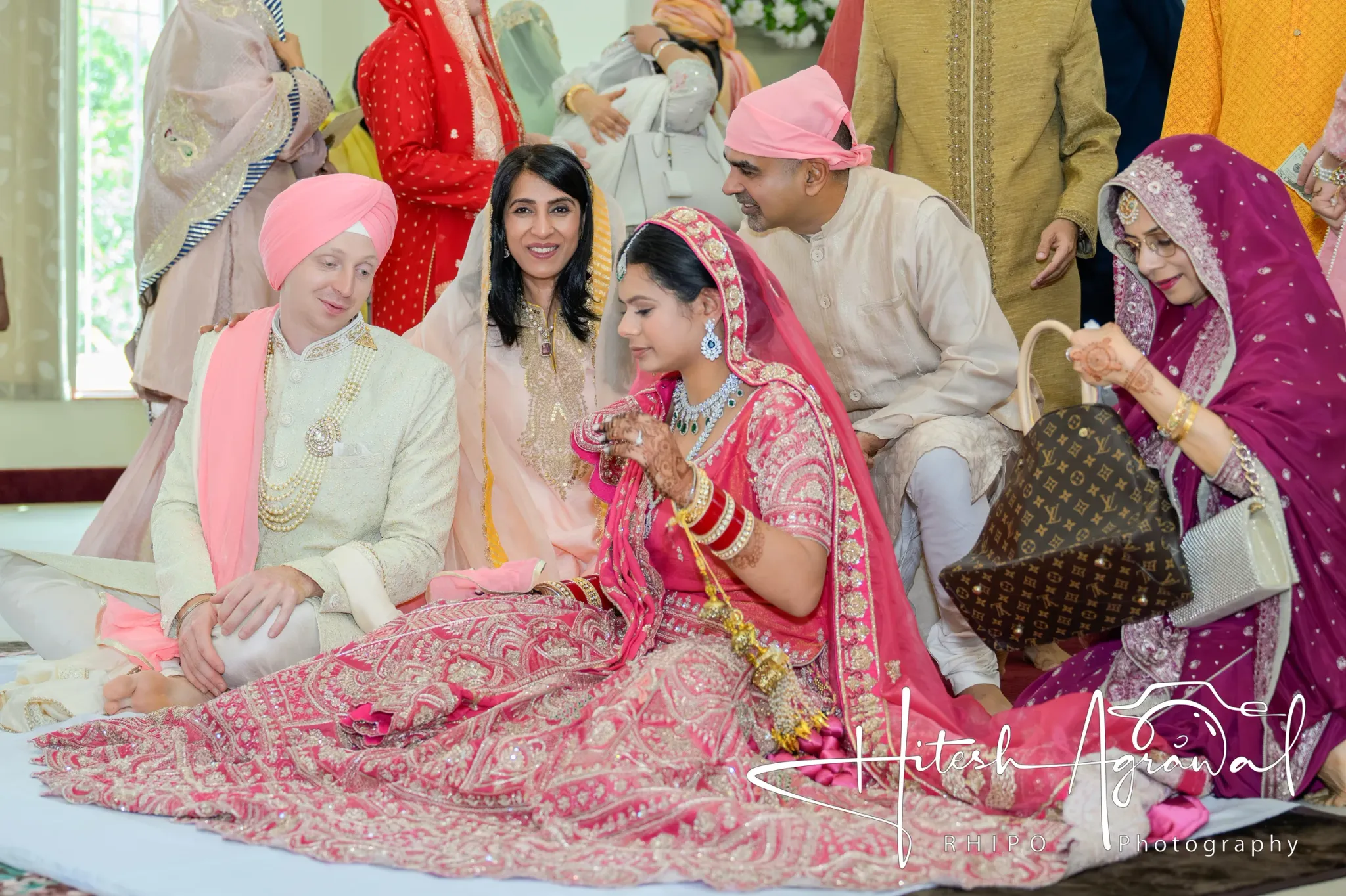
The Ghadoli (also spelled Gharoli, or called Ghadi Ghadoli) is a Punjabi pre-wedding ritual. The women of the family carry a decorated earthen pitcher, the ghada, to fetch water for the bride’s ceremonial bath. Paired with the Paath, it was a small family event, and three hours was plenty.
What we covered: candid moments, close-ups of the ritual, the bride on her own, and the bride with family and friends. The Choodah, when the bride receives her wedding bangles, often happens around the same time.
Day 2: Mehndi (3 hours)
The Mehndi was another small, intimate evening. We photographed and filmed the henna being applied, with close-ups of the designs, portraits of Ananya, and candid shots of friends and family enjoying themselves and dancing.
Day 3: Haldi and Sangeet (4 hours)
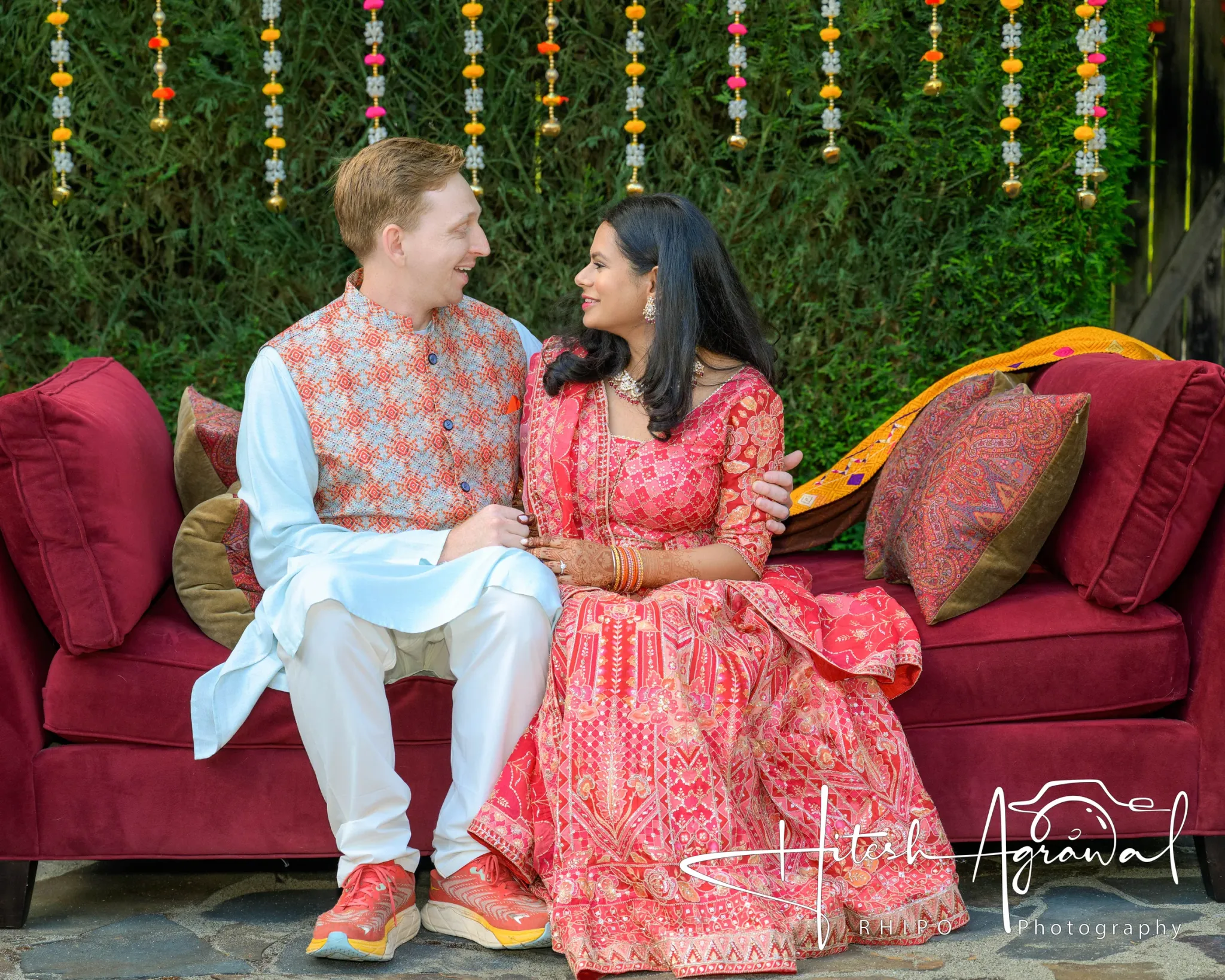
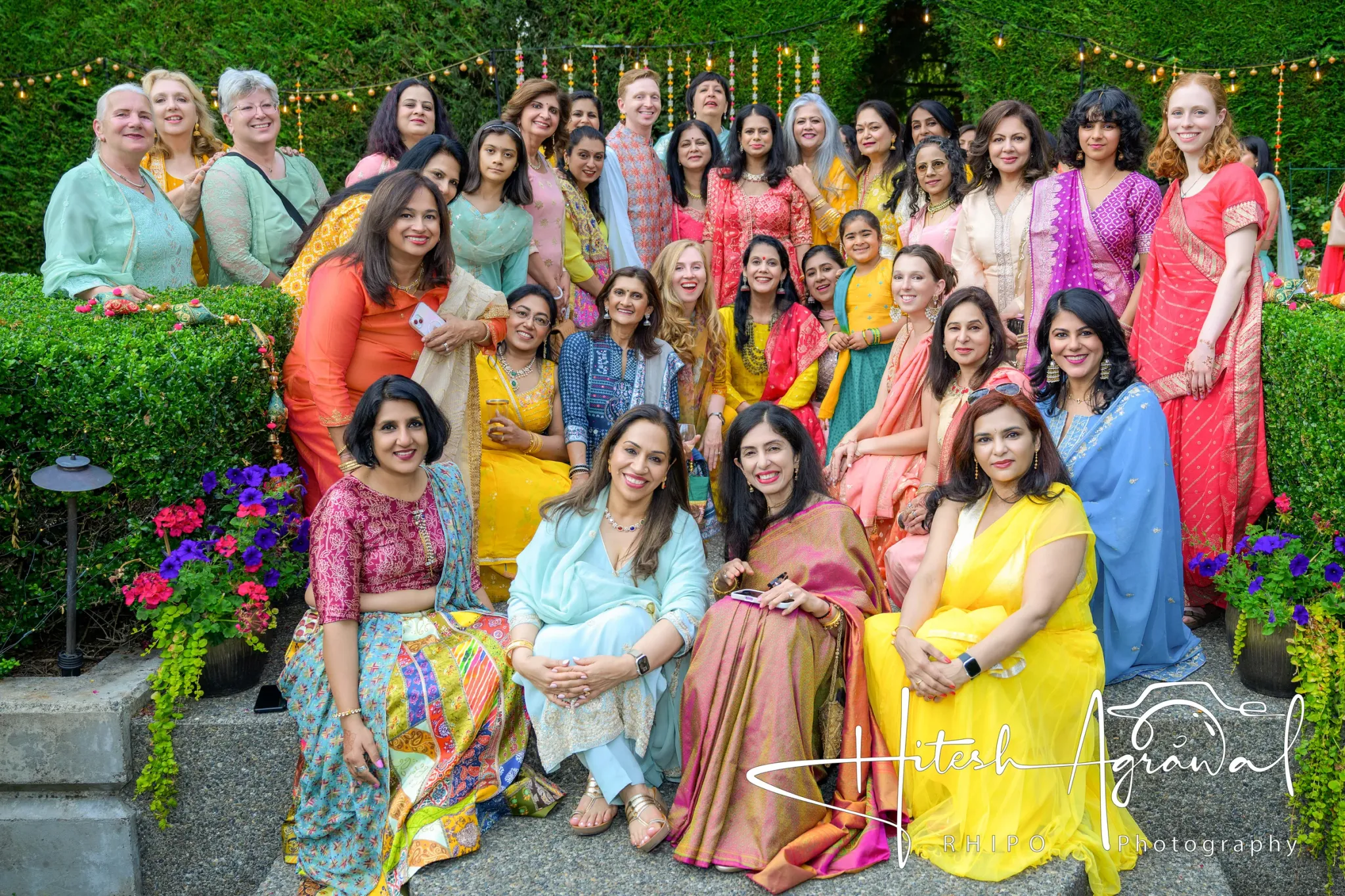
The Haldi and Sangeet shared one afternoon and evening, so we booked a photographer and a videographer for four hours. The Haldi came first, with close-ups as the turmeric paste was applied and portraits of the bride with her family. Relatives and friends then sang traditional songs, and the evening ended with dance performances by Ananya, her cousins and her friends.
A tip for Sangeet nights: send us the order of performances beforehand, so we are in the right spot when each one starts.
Day 4, morning: the Sikh Anand Karaj (6 hours)
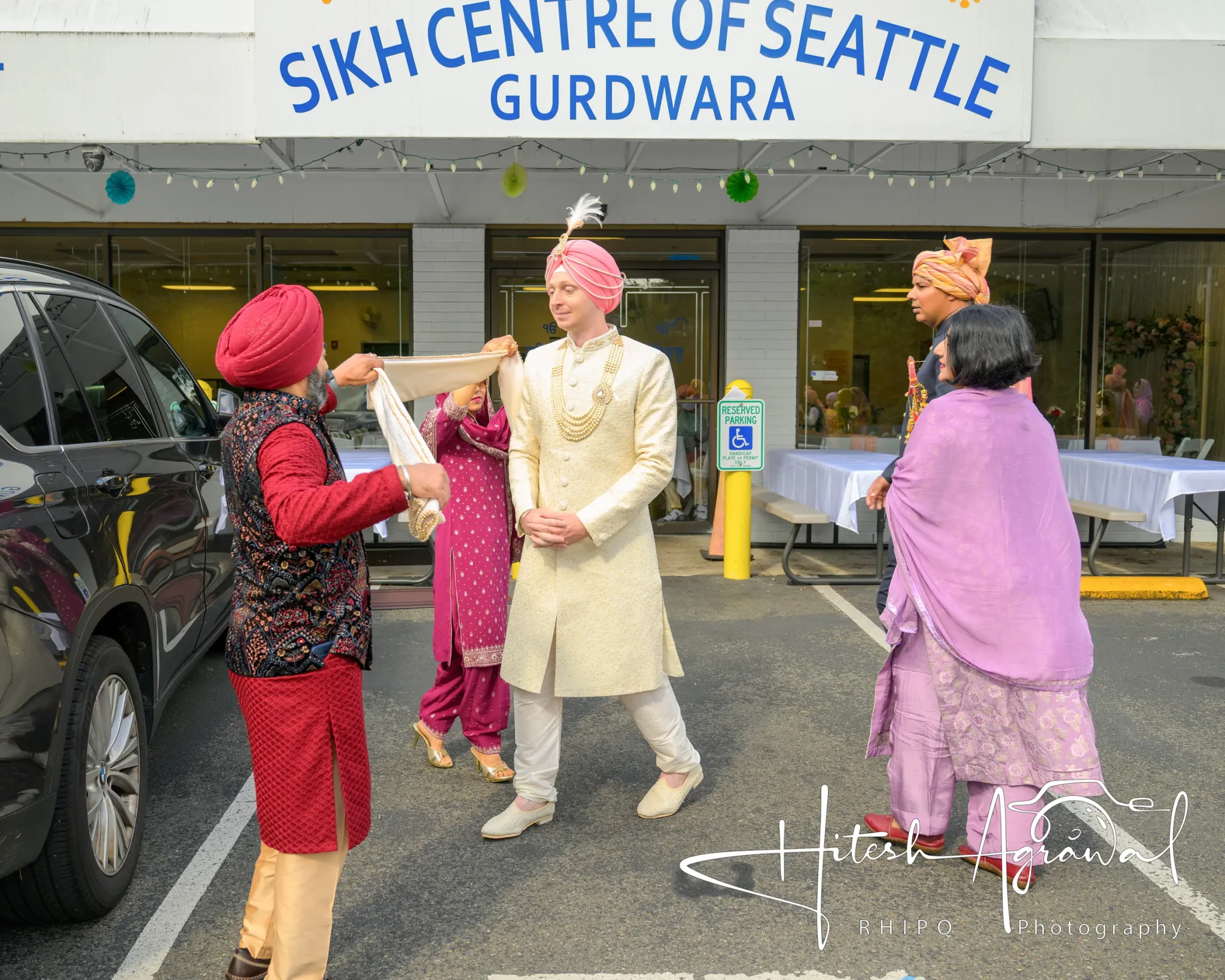
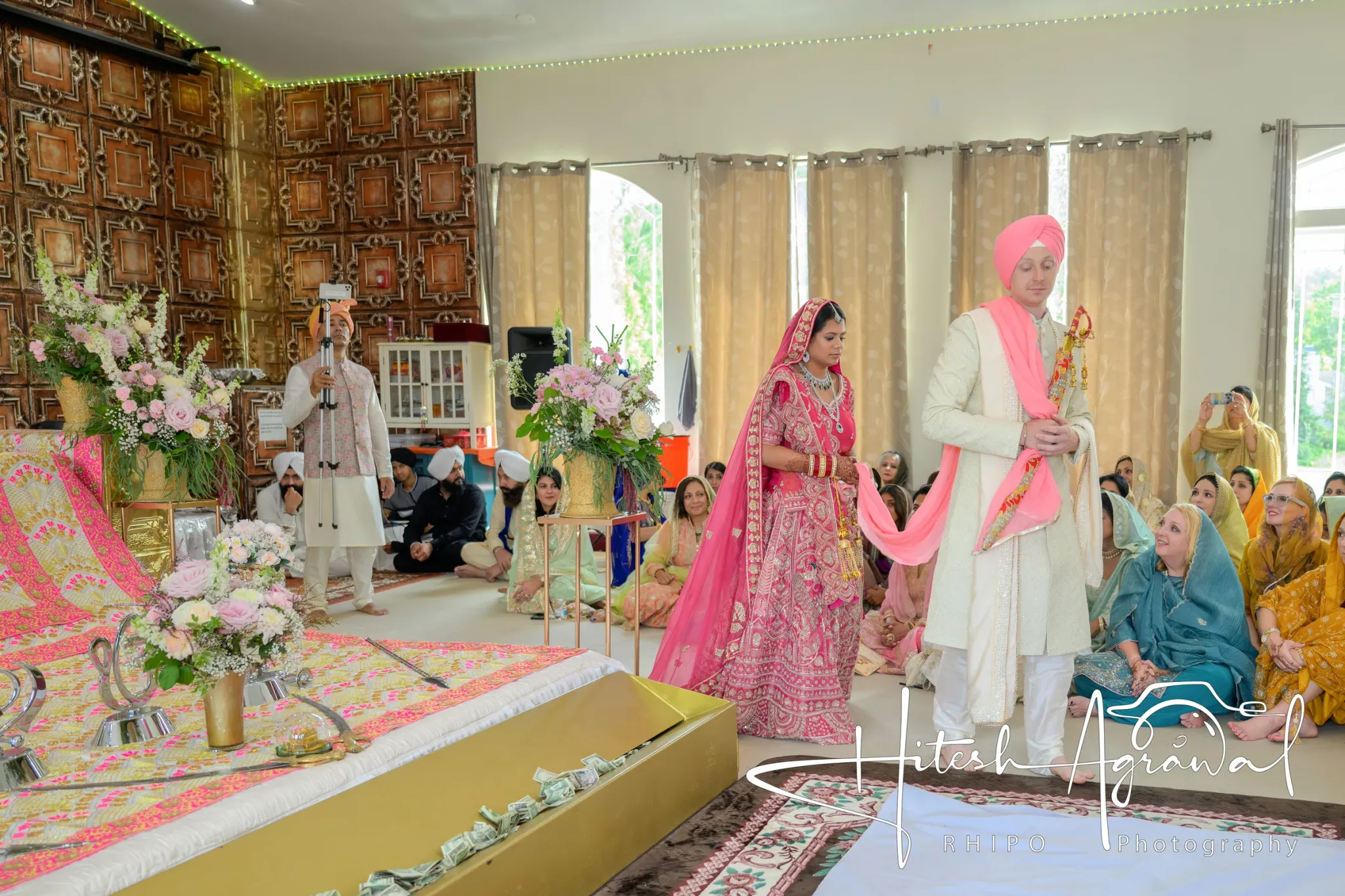
The wedding day began at the gurdwara with photo, video and drone coverage. It started with the Milni, where the two families greet and embrace, followed by the Anand Karaj itself, with the couple walking the four Lavan around the Guru Granth Sahib, and ended with the Vidai.
We recorded the kirtan and the ceremony audio as well as the pictures, because the hymns are the heart of an Anand Karaj film. A gurdwara is a place of worship first, so we work quietly and follow its rules on where we can stand. If there’s time after the Vidai, a short couple shoot in Seattle fits into the same booking.
Day 4, evening: the Vedic ceremony (3 hours)
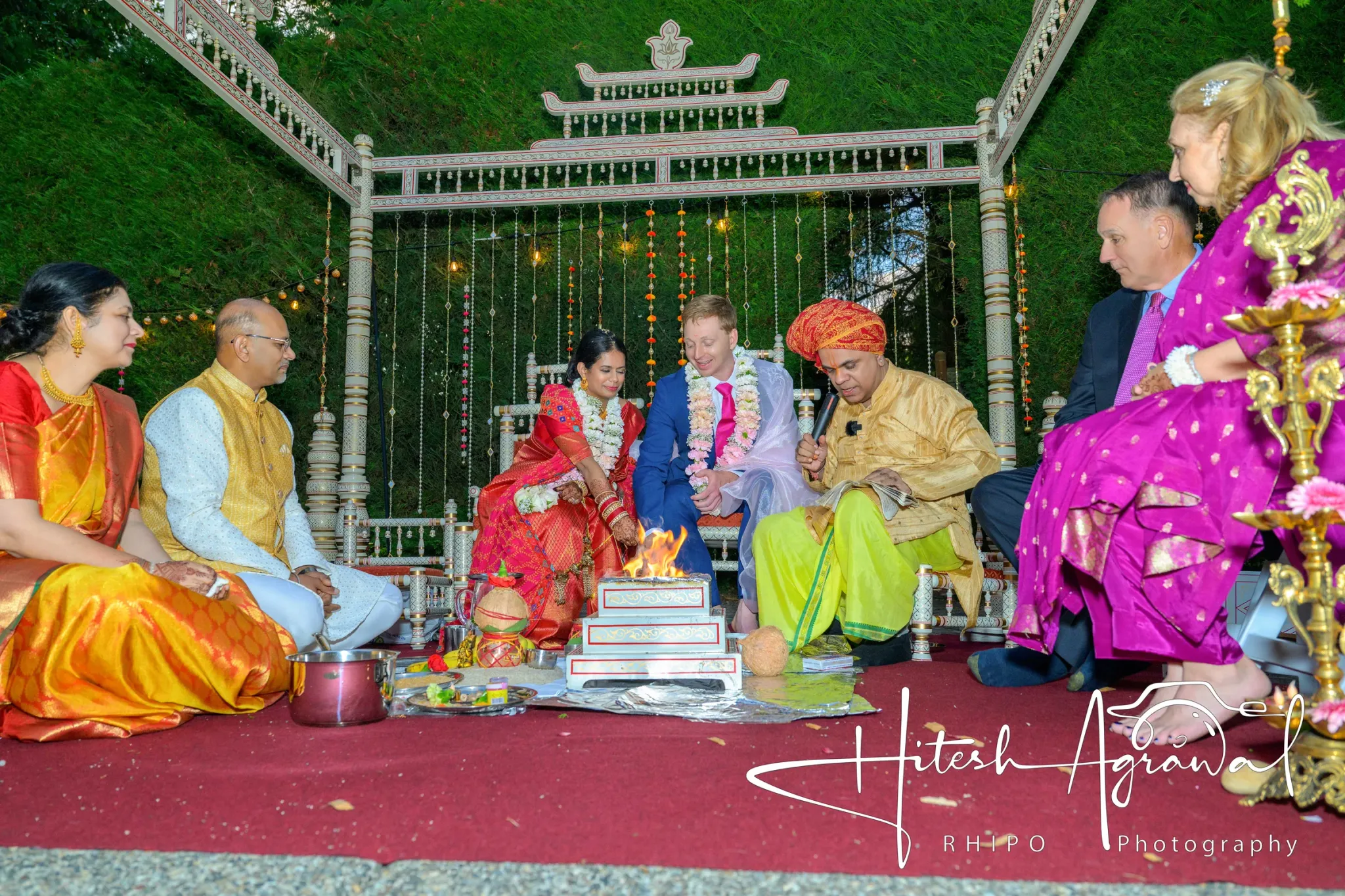
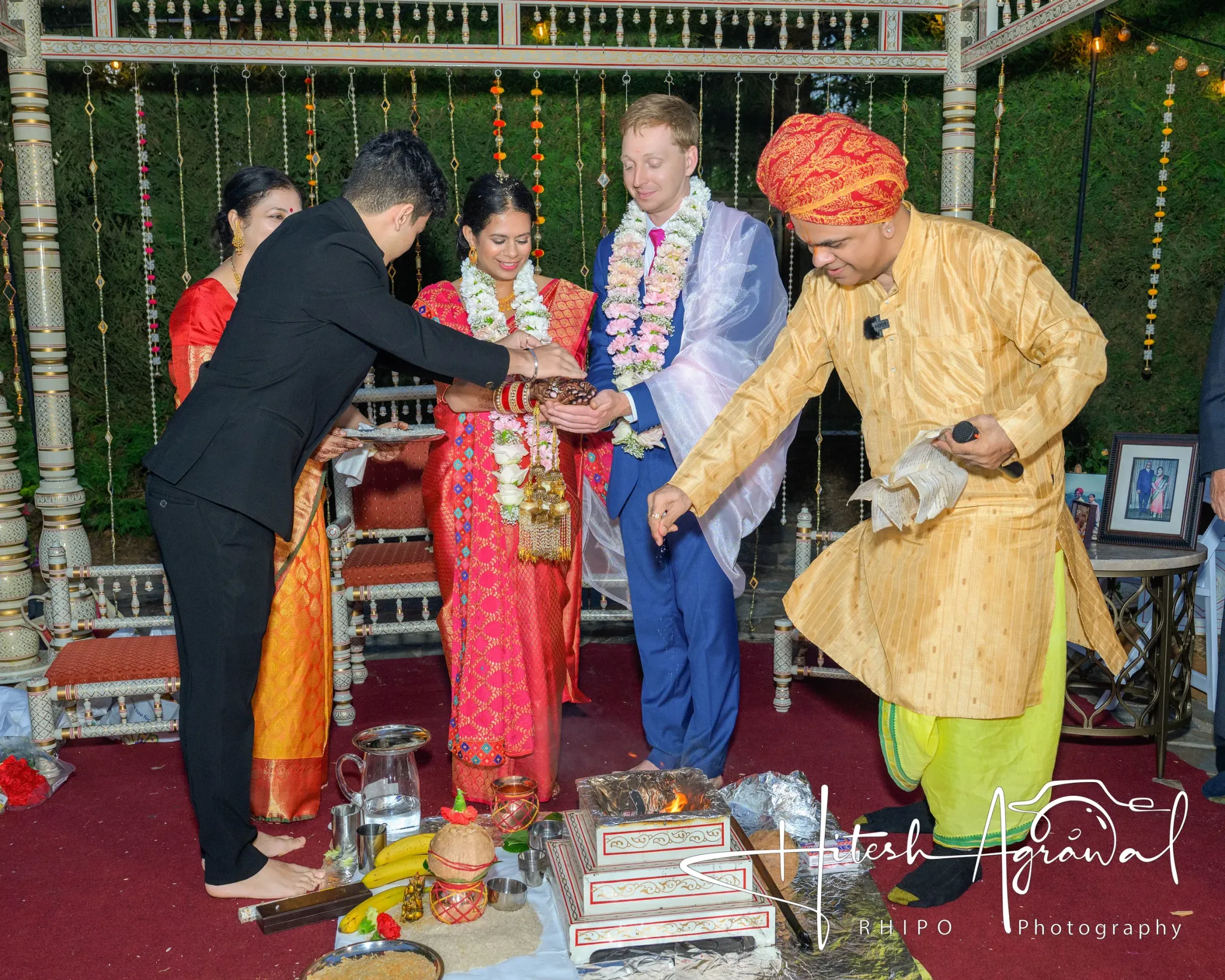
The same evening the family held a Vedic ceremony in their backyard, around a mandap and the sacred fire. Before it began we photographed Ananya on her own and with her mother, father and bridesmaids. Then we covered the Pheras and the other rituals, recording the priest’s mantras for the film, followed by candid moments and the Vidaai.
Two ceremonies in one day means building in travel and outfit-change time between them, and agreeing that plan with both families in advance.
Day 5: Christian vows and reception (6 hours)
The last day was the longest. At The Club at Snoqualmie Ridge we covered:
- Bride and groom getting ready, and a first look
- The venue decoration, the gown and accessories, and drone footage of the setting
- Portraits of each of them alone and with their parents, bridesmaids and groomsmen
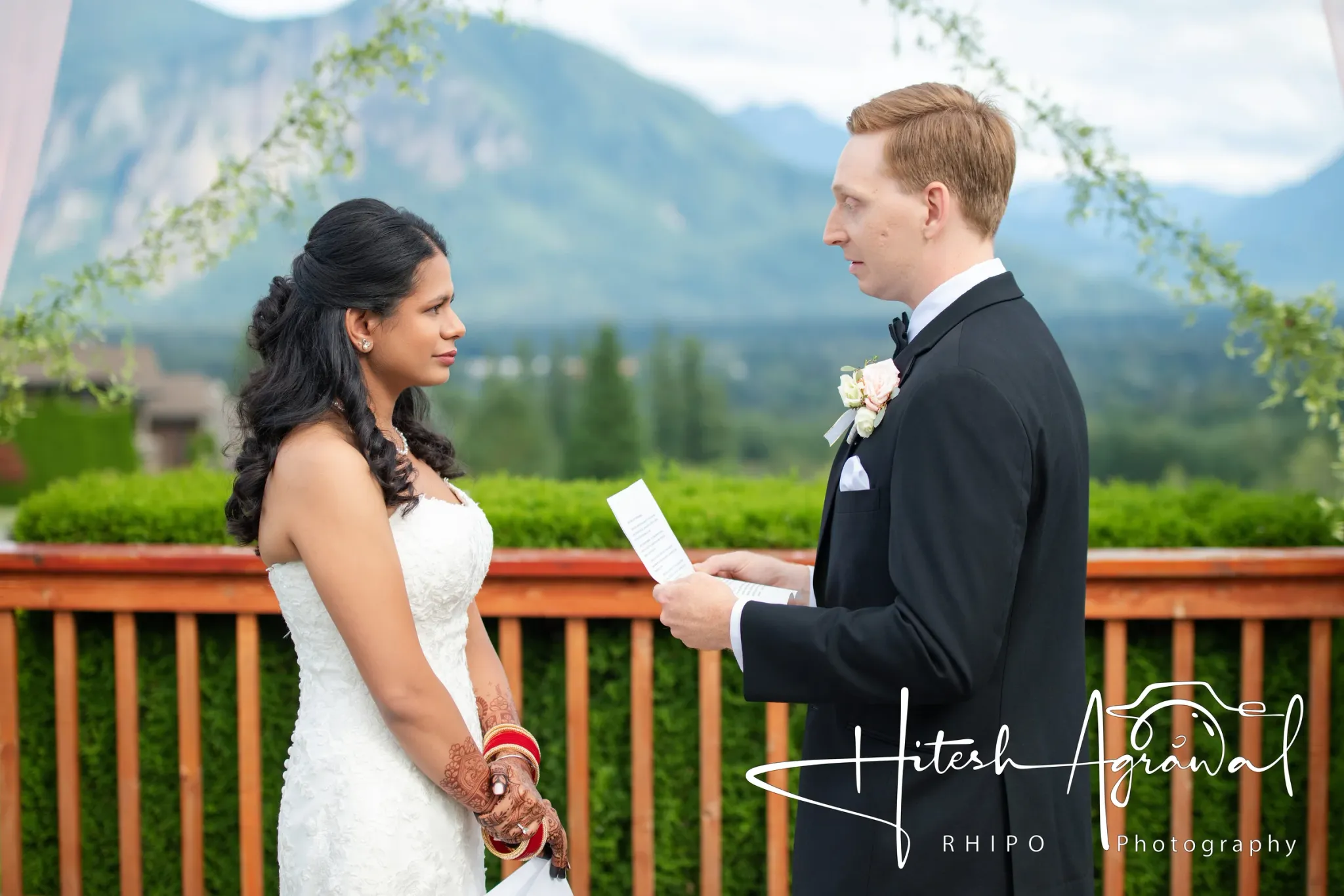
- The vows on the lawn, with the mountains behind
- Speeches, the first dances and everyone on the dance floor
- The couple’s exit to the car
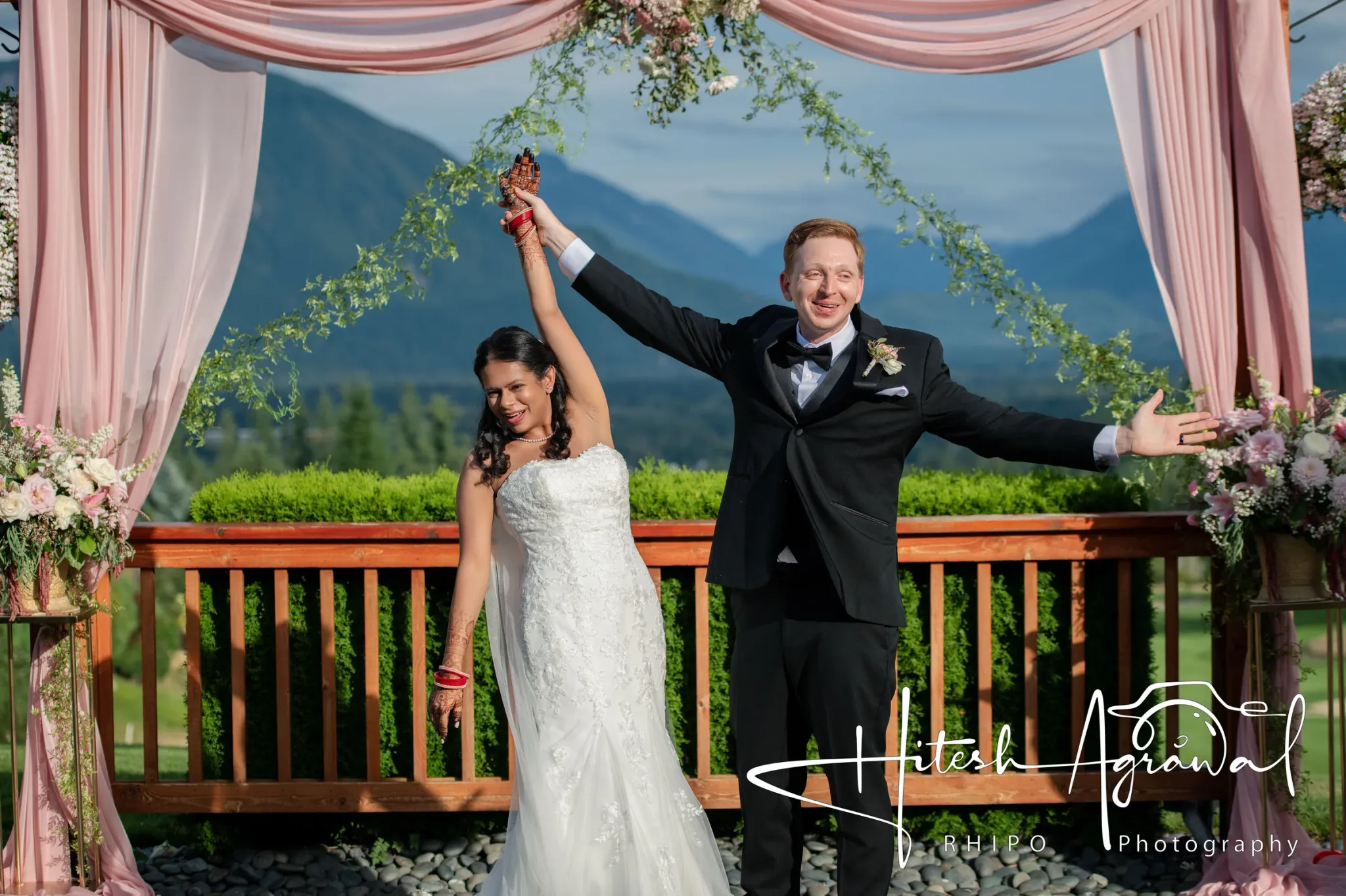
Read the full story of Ananya and John’s wedding, or see our Snoqualmie Ridge venue guide.
What they received
Edited photos from all five days, a 15-minute highlight film covering every event from the first ritual to the reception, and a 60-minute film focused on the ceremonies and speeches.
If relatives can’t travel, a live YouTube stream of the ceremonies can be added. Confirm it at least two weeks ahead, and make sure the venue has fast Wi-Fi or a wired connection.
How to plan coverage for your own multi-day wedding
- List every event first, with its date, place and rough start time. Coverage is booked by the hour, so this list is the start of your quote.
- Match the hours to the event. Intimate home events like a Ghadoli or Mehndi usually need 2–3 hours; a Haldi and Sangeet together around 4; ceremonies and receptions 5–6 or more.
- Allow travel time between venues, especially on a day with two ceremonies.
- Ask for ceremony audio. The kirtan, mantras and vows make the film.
- Treat drone shots as a bonus. They depend on the weather and the venue’s permission.
- Send a detailed timeline at least a week before, with names for the family photo list, so the team knows who to find.
- Add a second photographer for big ceremonies and receptions. Small home events rarely need one.
Every wedding is different, so we build a custom package around your events. See the pricing guide for starting prices, or read how we cover Sikh, Hindu and fusion and interfaith weddings.
Questions couples ask
- How many days does an Indian wedding last?
- Most Indian weddings in the Seattle area run three to five days, from pre-wedding rituals like the Mehndi, Haldi and Sangeet to the ceremony and reception. Ananya and John’s ran five days with six events.
- How many hours of photography does a multi-day Indian wedding need?
- It depends on the events. Ananya and John’s five-day wedding needed about 25 hours: 2–4 hours for each small home event and 5–6 hours for each ceremony and the reception.
- Do we need a photographer at every event?
- Not necessarily. Some couples cover only the main days. Small pre-wedding events can be booked for 2–3 hours, so including them costs less than people expect and gives you the family moments.
- Can one team cover a Sikh and a Hindu ceremony on the same day?
- Yes. On Ananya and John’s wedding day we covered the Anand Karaj at the gurdwara in the morning and the Vedic ceremony at home in the evening, about 9 hours in total, with travel time built in.
- When should we send the photographer our timeline?
- At least seven days before the first event, with start times, addresses and the family photo list. Small changes on the day are fine; bigger ones are easier with 48 hours’ notice.
Planning a multi-day wedding?